Oven Baked Chicken Tenders With Golden Crunchy Crust
We may earn a commission for purchases made using our links. Please see our disclosure to learn more.
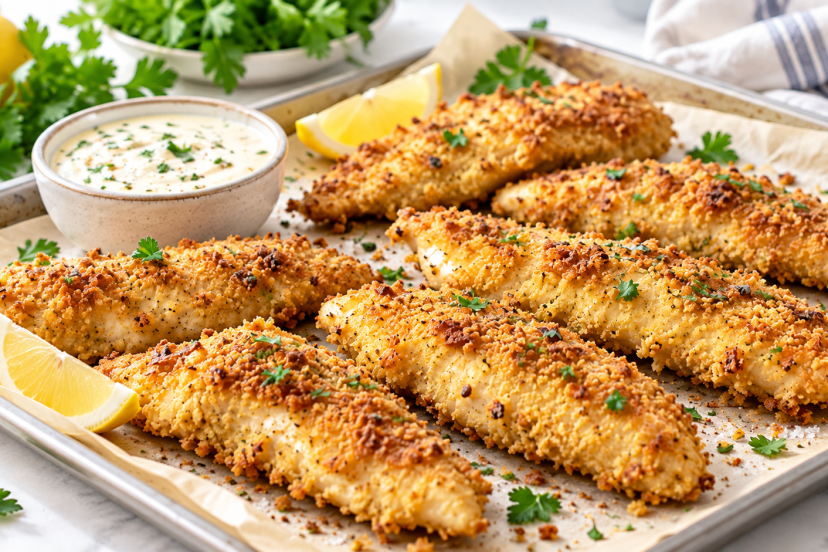
There is something hard to resist about a chicken tender with a crisp, golden coating and juicy chicken inside. The good news is that you do not need a deep fryer to get that satisfying crunch. With the right coating and a hot oven, oven baked chicken tenders can turn out crisp, flavorful, and surprisingly easy to make.
The trick comes down to a few simple details. Dry the chicken well, build a coating that can crisp in the oven, add a little oil, and give each tender enough room on the baking sheet. A wire rack can also help hot air reach more of the coating instead of leaving the underside soft.
Whether you are making dinner for the family or preparing an easy meal for the week, this method gives you crispy chicken without dealing with a pot of hot frying oil.
How to Make Oven Baked Chicken Tenders Extra Crispy
Crispiness starts with the coating. Panko breadcrumbs work especially well because their larger, airy flakes create more texture than many fine breadcrumbs.
The coating also needs enough heat to dry and brown. As the breading cooks, moisture moves out of the outer layer while browning develops color and flavor. Research on breaded chicken shows that coating structure and cooking conditions can influence crust color and texture. Learn more about chicken breading and crust texture.
Oil matters, too. You do not need to soak the tenders in it. A light coating or spray helps the breadcrumbs brown more evenly and gives them a richer, crunchier finish.
For the best texture, avoid crowding the chicken. When the tenders sit too close together, trapped moisture can soften the coating instead of allowing it to crisp.
Ingredients You’ll Need
For about 4 servings, gather:
- 1½ pounds boneless, skinless chicken tenders or chicken breast cut into strips
- 1 cup panko breadcrumbs
- ½ cup all-purpose flour
- 2 large eggs
- 1 teaspoon garlic powder
- 1 teaspoon paprika
- ½ teaspoon onion powder
- ½ teaspoon salt
- ¼ teaspoon black pepper
- 2 tablespoons olive oil or cooking spray
- Optional: ¼ cup grated Parmesan cheese
Feel free to change the seasonings based on what you like. Add a little cayenne for heat or Italian seasoning for a more herb-forward version.
If you enjoy experimenting with easy chicken meals, check out these easy chicken recipes for more ideas.
How to Bake Chicken Tenders Until Golden and Crispy
1. Prepare the Chicken
Heat your oven to 425°F. Prepare your baking surface by fitting a sheet of parchment over the pan. You can also set an oven-safe wire rack on top of the sheet.
If you are using chicken breast, cut it into strips of similar thickness. Keeping the pieces relatively uniform helps them cook at roughly the same rate.
Use paper towels to gently blot the chicken until the surface is dry. This small step makes a difference because excess surface moisture can make it harder for the breading to stay crisp.
2. Prepare the Coating
Set up three shallow bowls.
For an easy breading station, grab three wide, shallow dishes. Add the flour to the first bowl. Whisk the eggs until smooth in one dish. In another, stir together the panko, garlic powder, paprika, onion powder, salt, pepper, and optional Parmesan.
This three-step setup gives the breadcrumbs something to cling to without requiring a thick coating.
3. Coat Each Tender
Dip each chicken strip into the flour and shake off the excess.
Dip each chicken strip into the beaten egg, allowing any extra to drain off before moving on.
Then transfer the chicken to the seasoned panko. Press the crumbs lightly onto all sides to help them stick.
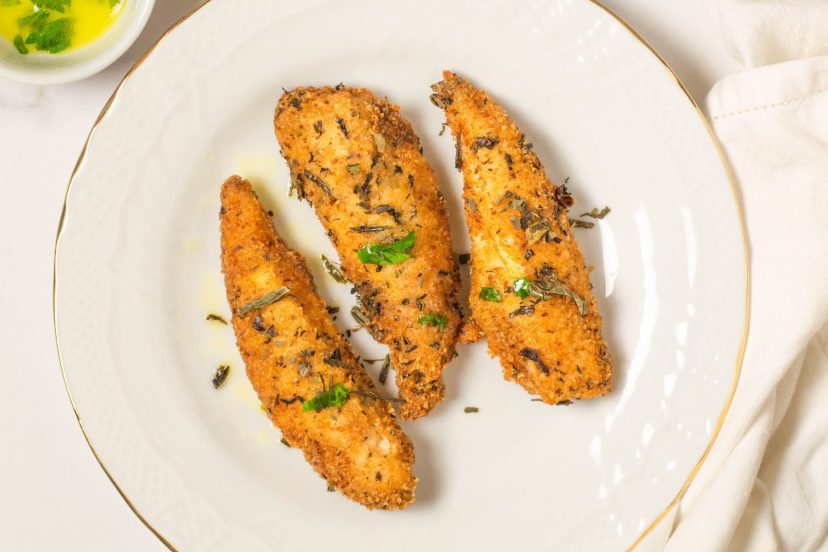
Once breaded, transfer the chicken pieces to the lined pan or arrange them on the rack, making sure they do not touch. Arrange the coated tenders with some space between each piece so they cook and brown evenly.
4. Add a Little Oil
Lightly spray or brush the breaded chicken with oil.
You do not need much. The goal is to help the exposed breadcrumbs brown and crisp rather than saturate the coating.
If you want an especially crunchy finish, make sure the oil reaches the dry breadcrumb surface instead of simply pooling underneath the chicken.
5. Bake Until Golden
Bake the chicken for approximately 15–20 minutes, depending on the thickness of the tenders.
Turn the pieces halfway through if you are baking directly on the sheet. If you are using a wire rack that allows air to circulate underneath, flipping may not be necessary.
Look for a golden-brown crust, but do not rely on color alone to determine whether the chicken is safe.
According to the USDA, poultry should reach an internal temperature of 165°F (73.9°C) for safe consumption. Check the chicken with an instant-read thermometer before serving to confirm it has reached a safe temperature.
Insert the thermometer into the thickest section of the chicken tender for the most accurate reading. Once the chicken reaches 165°F, remove it from the oven and let it rest briefly before serving.
Tips for a Golden, Crunchy Crust
Use panko breadcrumbs
Panko creates a rougher surface than fine breadcrumbs, which gives the finished chicken more crunch.
Do not skip drying the chicken
Wet chicken can make the coating slide around or become soggy. Patting the strips dry before breading helps the coating adhere.
Give the tenders room
Avoid arranging the chicken in a crowded layer. Air needs to circulate around the pieces so the coating can dry and brown.
Use a wire rack
A rack elevates the chicken above the baking sheet. This allows heat and air to reach more of the underside, which can help prevent a soft bottom.
Add oil sparingly
A light spray is enough. Using excessive oil can leave the breading heavy and greasy rather than light and crunchy.
Do not overbake
Chicken tenders are relatively thin, so they can go from juicy to dry fairly quickly. Start checking the internal temperature before assuming they need additional cooking time.
How to Know When Chicken Tenders Are Done
The safest way to check chicken is with an instant-read food thermometer.
Do not use the chicken’s color alone to determine whether it is fully cooked. The USDA specifically recommends using a thermometer because chicken can sometimes remain pink even after reaching a safe temperature.
For chicken tenders, check the thickest part of the meat and make sure it reaches 165°F.
If the coating looks beautifully browned but the chicken has not reached the safe temperature, continue baking. If the chicken reaches temperature before the crust becomes as dark as you want, you can briefly increase the oven heat or use the broiler while watching it closely.
Easy Ways to Serve Them
These tenders work with much more than ketchup.
Try serving them with:
- Honey mustard
- Ranch dressing
- Barbecue sauce
- Buffalo sauce
- Garlic aioli
- Sweet chili sauce
For a complete meal, pair them with roasted potatoes, corn, coleslaw, steamed vegetables, or a simple green salad.
You can also slice leftover tenders and add them to wraps, salads, rice bowls, or sandwiches.
Recommended Products
A few basic kitchen tools can make this recipe easier and more consistent:
- USA Pan Half Sheet Baking Pan and Bakeable Nonstick Cooling Rack — A rack-and-pan setup is useful when you want better airflow around the chicken.
- ThermoPro TP19H Digital Meat Thermometer — An instant-read thermometer makes it much easier to check that the chicken has reached 165°F.
- Kikkoman Panko Bread Crumbs — Panko gives the coating a light, coarse texture that works well for baked chicken.
- Cuisinart Stainless Steel Mixing Bowls with Lids — Multiple bowls make the flour, egg, and breadcrumb stations easier to organize.
- FLAIROSOL Olivia Oil Sprayer — A reusable oil sprayer can help distribute a thin layer of oil over the breading.
Conclusion
Making oven baked chicken tenders with a crunchy crust does not require deep frying or complicated ingredients. Start with dry chicken, build a flavorful panko coating, add a light layer of oil, and bake the tenders in a hot oven with enough space between them. A wire rack can improve airflow, while an instant-read thermometer takes the guesswork out of checking doneness. Most importantly, cook the chicken to 165°F for safety. Once you have the basic method down, you can change the seasonings, sauces, and sides to create a different meal every time.
FAQs
1. How do you keep oven baked chicken tenders crispy?
Use panko breadcrumbs, avoid overcrowding the baking sheet, and lightly coat the breading with oil. Baking the tenders on a wire rack can also improve airflow around the chicken.
2. What temperature should chicken tenders be baked at?
A temperature around 425°F works well for creating a browned, crisp coating while cooking the chicken relatively quickly. Always check the thickest part with a food thermometer and make sure it reaches 165°F.
3. Can I make chicken tenders without frying them?
Yes. Oven baking provides a convenient alternative to deep frying. A well-seasoned breadcrumb coating and a small amount of oil can produce a crisp exterior without submerging the chicken in oil.
4. Why are my baked chicken tenders soggy?
Excess moisture, too much oil, overcrowding, or insufficient heat can all contribute to a soft coating. Pat the chicken dry, leave space between the pieces, and use a hot, fully preheated oven.
5. Will regular breadcrumbs work instead of panko?
Yes. Regular breadcrumbs will work, but they usually create a finer, more compact coating. Panko tends to produce a more textured and crunchy crust, which makes it especially useful for baked chicken tenders.