You’ll Love This Zucchini Bread From The First Bite!
We may earn a commission for purchases made using our links. Please see our disclosure to learn more.
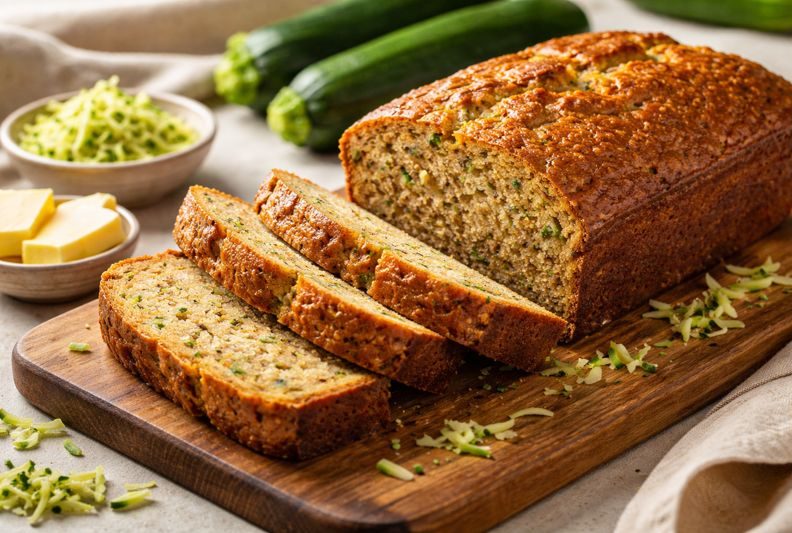
Zucchini bread is one of the easiest quick breads to master, and its signature moisture and soft texture make it a favorite for beginners and seasoned bakers alike. This guide breaks down what makes zucchini bread work so well—how ingredients interact, why certain methods matter, and how small adjustments can improve flavor and consistency. If you want a simple, reliable way to bake a loaf that turns out tender every time, you’re in the right place.
Why Zucchini Bread Is Everyone’s Favorite Quick Bread
Zucchini bread became a household staple for good reason. It’s moist, subtly sweet, easy to customize, and incredibly forgiving. Even if your measurements aren’t perfect or your mixing technique is a little enthusiastic, the natural moisture from the zucchini helps keep the loaf tender rather than dry.
Another reason this recipe wins hearts? Its flavor profile. Instead of tasting like vegetables, zucchini blends into the batter, enhancing softness while allowing warm flavors—like cinnamon, nutmeg, vanilla, or cocoa—to shine. The result is a bread that feels nostalgic, homemade, and pleasantly filling.
Because zucchini bread doesn’t rely on complicated steps or specialized skills, it’s perfect for bakers who want something rewarding without the stress of precision baking. You mix, pour, bake, slice, and enjoy. That’s why many home bakers consider it their go-to quick bread throughout the year.
What You Need to Make Perfect Zucchini Bread
Making zucchini bread doesn’t require fancy ingredients or advanced equipment. However, a little attention to detail goes a long way toward achieving the perfect texture.
Fresh Ingredients Matter
Zucchini:
Choose medium-sized zucchini with bright skin. Large zucchini contain more water and seeds, which can lead to soggy bread unless properly drained.
Flour:
All-purpose flour is classic, but whole wheat or gluten-free blends also work. Each creates a slightly different crumb, so feel free to experiment based on your preferences.
Sweeteners:
White sugar gives a traditional flavor, while brown sugar adds depth and subtle caramel notes. Some bakers also use maple syrup or coconut sugar for a healthier twist.
Fat Source:
Oil works best because it keeps the bread exceptionally moist. Butter adds flavor but makes the loaf slightly denser. Both are great choices—use whatever matches your style.
Must-Have Tools
A few reliable tools make the process smoother and help you achieve consistent results:
- A sturdy grater
- Measuring cups and spoons
- Mixing bowls
- A 9×5-inch loaf pan
- A silicone spatula for gentle mixing
Having the right tools doesn’t just make baking easier; it also improves texture by ensuring your batter is mixed evenly.
Step-by-Step: How to Make Moist, Flavorful Zucchini Bread
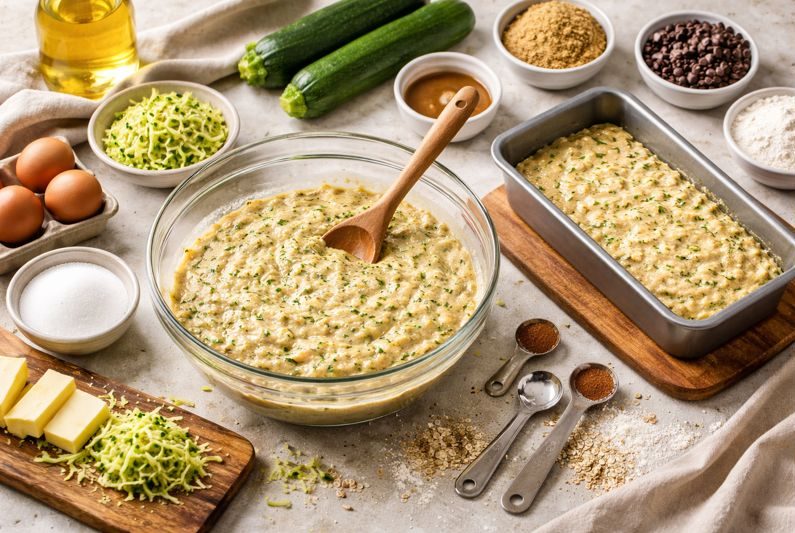
This recipe follows a simple framework: prep, combine, bake, and enjoy. But within those steps are small details that truly elevate your bread.
Step 1 — Prep & Measure Ingredients Correctly
Correct measurement is one of the secrets behind consistent baking. Scoop your flour lightly and level it with a flat edge. Overpacking flour is the most common cause of dry bread.
Next, grate the zucchini and gently squeeze out excess moisture. You don’t need to wring it dry—just remove enough water to prevent a mushy texture.
Step 2 — Build Your Batter
Start by mixing the dry ingredients in one bowl and the wet ingredients in another. This prevents overmixing once they come together.
The batter should be thick enough to hold shape but still easy to pour into the pan. Add cinnamon, nutmeg, vanilla extract, or chocolate chips if you want to build layers of flavor. Stir only until combined. A few streaks of flour are fine—what you want is a tender crumb, not a tough one.
Step 3 — Bake It to Perfection
Preheat the oven to 350°F (175°C). Spread it into a greased loaf pan and gently level the surface.
Bake for 50–60 minutes, adjusting the time based on your oven. When a toothpick comes out clean—or with a few moist crumbs—you’re good to go. Let the loaf rest in the pan for about 10 minutes before moving it to a cooling rack. This prevents the bottom from becoming too soft.
Recommended Tools
These products aren’t required, but they certainly make the baking experience smoother and more enjoyable.
1. OXO Good Grips Box Grater – Sharp blades and comfortable handling help you grate zucchini quickly without slipping.
2. USA Pan 9×4 Loaf Pan – This pan offers even heat distribution, a nonstick coating, and reliable durability.
3. KitchenAid 5-Speed Hand Mixer – When you want a perfectly smooth batter without clumps, this mixer gets the job done.
4. Silicone Spatula Set – Gentle on bowls and ideal for folding ingredients without overmixing.
5. Reusable Parchment Paper Sheets – They keep the loaf from sticking and make cleanup effortless.
Why Zucchini Bread Stays So Moist
If you’ve ever sliced into a loaf of zucchini bread and wondered how it stays so tender, light, and perfectly moist, you’re not alone. There’s a surprising amount of delicious science behind this recipe’s success, and when you understand what’s happening in the oven, the results make perfect sense. Zucchini brings a naturally high water content, and research evaluating the use of vegetable additives in bread production shows that vegetables with strong water-binding capacity help baked goods stay moister, soften the crumb, and even slow down staling. You can see this demonstrated in a study that examined how vegetable components influence hydration and freshness in baked products.
That’s why grated zucchini acts like a built-in hydration booster—releasing just enough moisture during baking to keep the loaf tender without making it soggy.
Your choice of fat plays a major role, too. Research on the effect of fat replacers on batter and cake properties found that oil-based batters typically produce lighter, softer textures because oil coats flour particles more evenly than butter. This limits gluten development and helps prevent the dense or tough crumbs that sometimes happen when quick bread batter is overmixed.
Speaking of gluten, mixing technique matters. Overmixing activates too much gluten, which can make zucchini bread chewy instead of cake-soft. Gentle stirring keeps the crumb light, springy, and tender.
Finally, as the batter heats up, starches begin to swell—a process known as starch gelatinization—creating structure while trapping moisture inside the loaf. When you combine all these elements with a vegetable that naturally boosts hydration, you end up with zucchini bread that stays soft, flavorful, and irresistible every single time.
Variations You Can Try
Zucchini bread is endlessly versatile. You can elevate the classic recipe or switch up the flavor profile entirely.
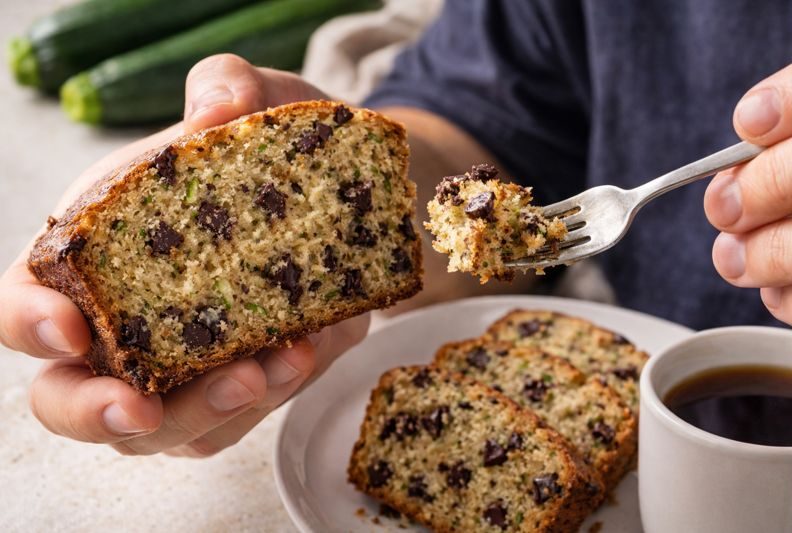
Chocolate Chip Zucchini Bread – Fold in ½ to 1 cup of chocolate chips if you want a sweeter, dessert-style twist.
Lemon Zucchini Bread – Add lemon zest and a small splash of lemon juice to brighten the flavor and balance the sweetness.
Gluten-Free Version – Use a 1:1 gluten-free flour mix and add a bit more grated zucchini to help keep the bread moist.
Lower-Sugar Option – Swap half the sugar for applesauce for a lighter, less sweet loaf. It sweetens naturally without compromising texture.
Expert Tips for Better Zucchini Bread
Here are some small but powerful adjustments that make a big difference:
- Don’t peel the zucchini—its skin adds nutrients and color.
- Let the batter rest for 5–10 minutes so it hydrates evenly.
- Try not to open the oven while the bread bakes—temperature drops can cause it to sink.
- Keep leftover slices in an airtight container so they stay soft.
- For freezing, wrap individual slices to keep them fresh.
These simple habits help your bread turn out consistently good.
Conclusion
Zucchini bread is one of those recipes that instantly becomes a household favorite. It’s easy, adaptable, and delightfully moist, making it an ideal treat for beginners and experienced bakers alike. With the right technique—and a few helpful tools—you can create a loaf that tastes incredible from the very first bite.
And if you’re feeling inspired to explore even more wholesome, plant-forward ideas, you’ll enjoy browsing through these delicious vegan breakfast recipes.
Happy baking!
FAQs
1. What makes zucchini bread so moist?
Zucchini contains natural water that releases during baking, creating a soft and tender crumb without making the bread soggy.
2. Should the zucchini be peeled before using it?
No. The zucchini’s skin softens in the oven and brings a bit of color, fiber, and texture to the loaf.
3. What causes zucchini bread to collapse in the center?
It may have been underbaked, overmixed, or measured with too much moisture in the zucchini. A steady oven temperature helps too.
4. Is it okay to cut back on the sugar?
Yes. Reducing the sugar by up to one-third or swapping part of it with applesauce keeps the structure intact.
5. How do I store zucchini bread to keep it fresh?
Place the cooled loaf or slices in a sealed container and keep them on the counter for up to three days. If you want them to last longer, chill or freeze them to maintain freshness.