Top 10 Pasta Makers
We may earn a commission for purchases made using our links. Please see our disclosure to learn more.
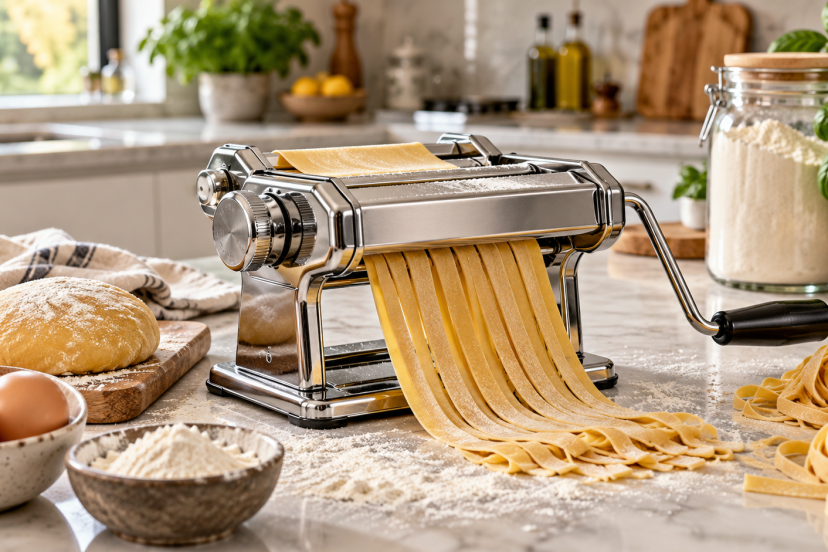
Making fresh pasta at home sounds complicated until the right machine takes over the hard part. The best pasta makers can roll dough evenly, cut consistent noodles, or even mix and extrude pasta automatically, giving you fresher results without spending half the day in the kitchen. We compared manual machines, electric models, and stand-mixer attachments so there is an option for beginners, traditional pasta lovers, busy families, and experienced home cooks. Here are our top 10 picks.
Our Top Picks
| Product | Best For | Key Feature | Rating |
| KitchenAid KSMPRA Pasta Roller & Cutter Set | KitchenAid owners | Three-piece powered attachment set | ★★★★★ |
| Marcato Atlas 150 | Best manual option | Italian-made adjustable rollers | ★★★★⯪ |
| Marcato Atlas 180 | Wider pasta sheets | 180 mm rollers | ★★★★⯪ |
| Sailnovo 3-in-1 Pasta Maker | Best value | Nine thickness settings | ★★★★⯪ |
| Imperia Classic Pasta Maker | Traditional pasta making | Heavy-duty Italian construction | ★★★★⯪ |
| Nuvantee Pasta Maker | Beginners on a budget | Adjustable roller and two cutters | ★★★★⯪ |
| Philips 7000 Series Pasta Maker | Automatic pasta making | Mixing and extrusion in one machine | ★★★★☆ |
| Philips Compact Pasta Maker | Small kitchens | Compact automatic design | ★★★★☆ |
| GVODE Electric Pasta Maker | Electric rolling and cutting | Powered 3-in-1 design | ★★★★☆ |
| VEVOR Electric Pasta Maker | Multiple pasta shapes | Eight shaping options | ★★★★☆ |
Top 10 Pasta Makers for Homemade Pasta
1. KitchenAid KSMPRA 3-Piece Pasta Roller & Cutter Set

If a KitchenAid stand mixer already lives on your counter, the KSMPRA is one of the easiest ways to upgrade your homemade pasta routine. Instead of turning a hand crank while guiding dough through the machine, the mixer supplies the power.
The three-piece set handles rolling plus common noodle cuts, making it especially convenient for fettuccine, spaghetti-style noodles, and fresh pasta sheets.
Key features: Pasta sheet roller, spaghetti cutter, fettuccine cutter, powered by KitchenAid stand mixer
Best for: KitchenAid owners who make pasta regularly
Pros: Hands-free power; sturdy construction; excellent customer feedback; three useful attachments
Cons: Requires a compatible KitchenAid stand mixer; costs more than basic manual machines
Why we recommend it: It removes the awkward hand-cranking step while delivering consistent sheets and noodles.
2. MARCATO Atlas 150 Pasta Maker

The Marcato Atlas 150 is a classic for a reason. Made in Italy, it combines a sturdy manual roller with cutters for lasagna sheets, fettuccine, and tagliolini, giving traditional pasta makers plenty of versatility.
Its adjustable rollers let you gradually thin the dough rather than forcing it through at one thickness. With tens of thousands of indexed reviews and strong customer feedback, it remains one of the most proven manual pasta machines available.
Key features: Adjustable rollers, lasagna roller, fettuccine cutter, tagliolini cutter, hand crank
Best for: Traditional homemade pasta enthusiasts
Pros: Excellent build quality; smooth rolling; made in Italy; established design
Cons: Manual operation takes more effort; needs to be clamped securely to a work surface
Why we recommend it: It offers excellent control and durability for cooks who enjoy making pasta the traditional way.
3. MARCATO Atlas 180 Classic Pasta Machine

The Atlas 180 follows the same traditional approach as the popular Atlas 150 but gives you a wider working surface. Its 180 mm roller is useful when preparing larger pasta sheets, particularly for lasagna and recipes where extra width helps. The chrome-steel construction feels substantial, and the integrated cutters handle fettuccine and tagliolini.
Key features: 180 mm roller, chrome-steel construction, fettuccine cutter, tagliolini cutter
Best for: Cooks who want wider pasta sheets
Pros: Wider roller; sturdy build; smooth manual control; respected Italian brand
Cons: Larger than standard 150 mm machines; premium price
Why we recommend it: The wider rollers make it particularly useful for cooks who frequently prepare lasagna and broad sheets of fresh dough.
4. Sailnovo 3-in-1 Pasta Maker

The Sailnovo 3-in-1 delivers plenty of flexibility without jumping into premium-machine pricing. Nine roller settings give you good control over dough thickness, while two cutters handle different noodle widths.
It is especially appealing for beginners who want to experiment with spaghetti, fettuccine, lasagna sheets, and similar fresh pasta without making a major investment. Thousands of indexed reviews give this budget-friendly machine a solid track record.
Key features: Nine thickness settings, dough roller, two cutting widths, countertop clamp
Best for: Budget-conscious beginners
Pros: Affordable; multiple thickness settings; versatile cutting options; compact
Cons: Not as refined as premium Italian machines; manual cranking requires two-handed coordination
Why we recommend it: It delivers the adjustments most beginners actually need at an approachable price.
5. Imperia Classic Pasta Maker

Imperia brings another distinctly Italian approach to fresh pasta. The Classic model uses heavy-duty steel construction along with a manual roller, wood-grip handle, and cutters for common pasta styles.
The easy-lock thickness control makes adjusting the rollers straightforward as you gradually work dough into thinner sheets. It suits home cooks who value a traditional machine and prefer hands-on control over an automated process.
Key features: Heavy-duty steel, adjustable roller, wood-grip crank, integrated cutters, cleaning brush
Best for: Traditional Italian-style pasta preparation
Pros: Solid construction; smooth thickness adjustment; classic design; versatile
Cons: Requires hand cranking; fewer reviews than several established competitors
Why we recommend it: Its robust construction and straightforward controls make it a compelling alternative to Marcato.
6. Nuvantee 3-in-1 Pasta Maker

The Nuvantee is a straightforward manual machine for anyone learning to make fresh pasta at home. Its adjustable roller lets you prepare different dough thicknesses, while two built-in cutting widths cover popular noodle styles.
It does not have the premium finish of a high-end Italian machine, but its combination of affordability and thousands of indexed customer reviews makes it a sensible starting point.
Key features: Adjustable thickness settings, dough roller, two noodle cutters, table clamp
Best for: First-time pasta makers
Pros: Affordable; simple controls; several pasta styles; established review history
Cons: Basic construction; manual operation can be slower for large batches
Why we recommend it: It covers the essentials without asking beginners to spend heavily on their first pasta machine.
7. Philips 7000 Series Pasta Maker HR2660/03

The Philips 7000 Series takes a completely different approach from traditional rollers. It combines dough preparation and extrusion, making it better suited to households that value speed and convenience over the hands-on pasta-making ritual.
It includes eight shaping discs and can prepare larger batches, making it especially attractive for families. The automatic process also helps reduce the mess and coordination involved with feeding dough repeatedly through manual rollers.
Key features: ProExtrude technology, 150W motor, eight shaping discs, automatic mixing and extrusion
Best for: Families wanting an automatic pasta maker
Pros: Highly automated; several pasta shapes; larger batch capacity; minimal manual rolling
Cons: Takes more storage space; cleaning involves more components; rating falls slightly below our preferred threshold
Why we recommend it: It turns fresh pasta into a much more convenient weeknight option for households that value automation.
8. Philips Compact Pasta and Noodle Maker

For cooks who like automatic pasta but lack the counter space for a larger appliance, the Philips Compact offers an appealing compromise. It mixes, kneads, and extrudes dough while maintaining a relatively compact footprint.
Three included shaping discs cover everyday pasta styles, and the automated workflow removes much of the learning curve associated with manual rolling. Its smaller size also makes storage easier in tighter kitchens.
Key features: Automatic mixing, kneading and extrusion, three shaping discs, compact body, recipe book
Best for: Small kitchens and occasional automatic pasta making
Pros: Compact; automated operation; beginner-friendly; minimal hand rolling
Cons: Fewer included pasta shapes; rating is slightly below our preferred 4.3-star benchmark
Why we recommend it: It gives small kitchens the convenience of automatic pasta making without demanding as much counter space.
9. GVODE Electric Pasta Maker Machine

GVODE’s electric model sits between a traditional hand-cranked machine and a fully automatic extruder. Its powered roller-and-cutter design keeps the familiar process of preparing pasta sheets while reducing the work required to crank dough manually. This style is useful when you want control over the dough but would rather keep both hands available to guide it through the rollers.
Key features: Electric roller, integrated cutters, 3-in-1 configuration, powered operation
Best for: Home cooks who want powered rolling and cutting
Pros: Less manual effort; familiar roller design; useful for repeated batches
Cons: Smaller review base; rating below our preferred benchmark
Why we recommend it: It offers a practical middle ground between manual machines and fully automatic extruders.
10. VEVOR Electric Pasta Maker

The VEVOR electric pasta maker focuses on variety and automation. Its eight pasta shapes and four operating modes provide several ways to change up homemade noodles without purchasing separate manual cutters. A 500-gram flour capacity also makes it suitable for preparing a decent family-sized batch.
Key features: 150W motor, eight pasta shapes, four intelligent modes, 500g flour capacity
Best for: Households wanting several automatic pasta shapes
Pros: Multiple shapes; automatic operation; useful batch capacity; included accessories
Cons: More parts to clean; current customer rating trails our top picks
Why we recommend it: Its wide range of shapes gives adventurous home cooks more room to experiment.
Final Thoughts
Choosing among the best pasta makers comes down to how you like to cook. We recommend the KitchenAid KSMPRA for KitchenAid owners who want speed and consistency, while the Marcato Atlas 150 remains our favorite traditional manual option. The Sailnovo and Nuvantee offer strong value for beginners, while the Philips machines are better suited to cooks who prefer automation. Once you start making fresh sheets, they can also be put to good use in comforting dishes like these chicken Alfredo lasagna rolls, giving you plenty of reasons to keep experimenting with homemade pasta.
FAQs
1. What is the best pasta maker for beginners?
A simple manual machine such as the Sailnovo or Nuvantee is a good place to start. Both offer adjustable thickness settings and common cutting widths without requiring a large investment.
2. Are electric pasta makers worth it?
Yes, especially if convenience is your priority. Fully automatic models can mix, knead, and extrude pasta, while powered rollers reduce the physical effort involved in traditional pasta making.
3. Is a manual or automatic pasta maker better?
Manual machines are better for cooks who want control over dough thickness and enjoy traditional pasta making. Automatic machines are better when speed, convenience, and reduced hands-on work matter more.
4. What pasta maker do you need for lasagna?
Choose a machine with an adjustable sheet roller. Models such as the Marcato Atlas 150, Atlas 180, Imperia Classic, Sailnovo, and KitchenAid KSMPRA can all produce sheets suitable for homemade lasagna.
5. How do you keep fresh pasta from sticking to a pasta maker?
Keep the dough relatively dry and lightly dust it with flour before rolling. If dough begins sticking, add a small amount of flour rather than forcing wet dough repeatedly through the rollers.