Italian-Inspired Sourdough Focaccia Recipe
We may earn a commission for purchases made using our links. Please see our disclosure to learn more.
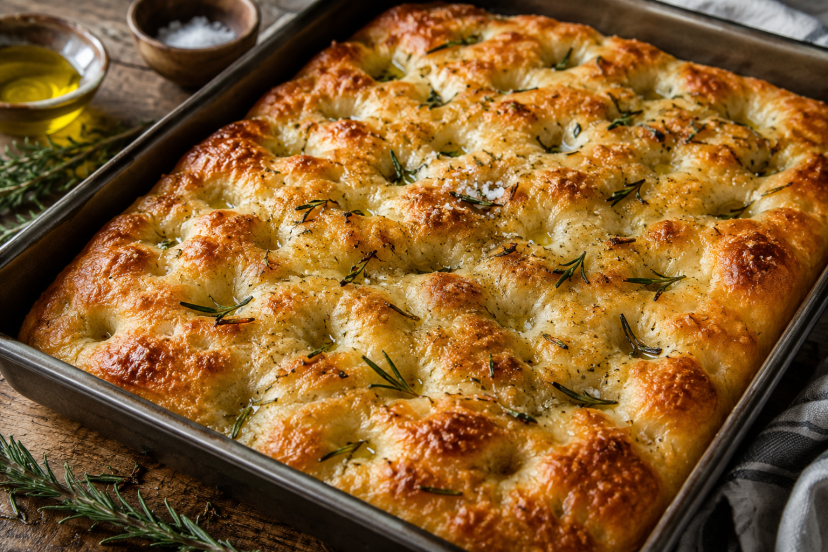
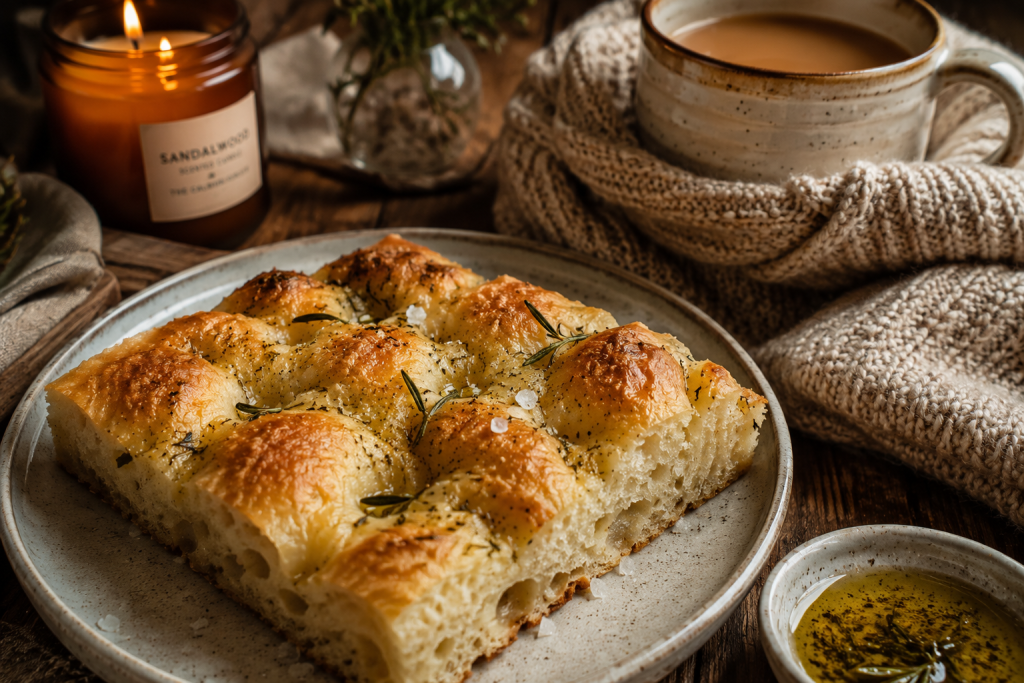
This Sourdough Focaccia Recipe gives you crisp golden edges, a soft airy center, and rich Italian-inspired flavor with simple pantry ingredients. Made with active sourdough starter, olive oil, herbs, and a slow rise, it delivers the kind of rustic homemade bread that feels special without being complicated. In this guide, you’ll learn how to mix, ferment, top, and bake focaccia that works beautifully with soups, pasta, salads, dips, or a simple drizzle of extra virgin olive oil.
Why You’ll Love This Sourdough Focaccia Recipe
A good focaccia should feel generous. It should not be dry, flat, or shy with olive oil. This version gives you that bakery-style texture without needing commercial yeast.
You get a crisp bottom, a tender interior, and beautiful bubbles from natural fermentation. Plus, the flavor tastes more developed than quick focaccia because the sourdough starter has time to work its quiet magic.
This recipe also fits real life. You can mix the dough in the evening, let it rise slowly, and bake it the next day. That slow process builds flavor while you get on with your day.
What Makes Sourdough Focaccia Different?
Traditional focaccia often uses yeast for a fast rise. Sourdough focaccia relies on an active starter instead of regular yeast, allowing natural wild yeast and friendly bacteria to slowly ferment the dough.
The result is a deeper flavor, a slightly tangy finish, and a texture that feels more interesting than standard bread. It also gives the crust a beautiful golden chew.
The dough is very hydrated, so it may look sticky at first. Do not panic. Sticky dough is normal here. In fact, that extra moisture helps create the open, airy crumb focaccia is known for.
Ingredients You’ll Need
You only need a handful of simple ingredients:
Active sourdough starter: Use starter that has recently been fed and looks bubbly.
Bread flour: This helps create the focaccia’s chewy bite and strong structure.
Water: Room-temperature water works well.
Olive oil: Use good extra virgin olive oil because the flavor matters.
Salt: Fine sea salt works inside the dough. Flaky salt works beautifully on top.
Italian herbs: Rosemary, oregano, thyme, or basil all work.
Garlic: Optional, but highly recommended if you love savory bread.
Best Flour for Sourdough Focaccia
Bread flour gives the best texture because it has more protein than all-purpose flour. That extra strength helps the dough hold bubbles during fermentation.
However, you can still use all-purpose flour if that is what you have. The focaccia may turn out slightly softer and less chewy, but it will still taste delicious.
For a nuttier flavor, replace 10–20% of the flour with whole wheat flour. Avoid using too much whole wheat at first, though. It absorbs more water and can make the bread denser.
Step-by-Step Sourdough Focaccia Recipe
Ingredients
- 100g active sourdough starter
- 500g bread flour
- 400g water
- 10g fine sea salt
- 30g extra virgin olive oil, plus more for the pan
- 1 tablespoon fresh rosemary
- 2 cloves garlic, thinly sliced
- Flaky sea salt for topping
Step 1: Mix the Dough
Pour the sourdough starter into a large bowl with the water, then mix until the liquid turns smooth and slightly milky. Add the flour, then mix until you no longer see dry spots.
Set the covered dough aside for roughly half an hour so the flour can fully hydrate. This resting time allows the flour to fully hydrate, making the dough softer and easier to work with.
Step 2: Add Salt and Olive Oil
Sprinkle the salt over the dough. Add the olive oil. Then use your hands to pinch and fold the dough until everything comes together.
At first, the dough may feel slick and loose. Keep going. After a minute or two, it will start to look smoother.
Step 3: Stretch and Fold
Over the next two hours, do three to four rounds of stretch and folds.
Lift one edge of the dough, pull it gently upward, then fold it back toward the center. Rotate the bowl as you work, folding each section toward the middle. Cover the bowl between each round.
This builds strength without kneading. It also helps trap air inside the dough.
Step 4: Bulk Fermentation
Cover the bowl again and let the dough rise at room temperature until it becomes airy, puffed, and lightly bubbled. This may take 4 to 6 hours, depending on your kitchen temperature and starter strength.
The dough does not need to double perfectly. Look for softness, bubbles, and visible growth.
Step 5: Cold Proof Overnight
Drizzle olive oil into a 9×13-inch baking pan. Move the dough into the pan and gently turn it so the surface gets coated in oil.
Cover the pan and refrigerate overnight. This long resting period deepens the flavor and helps prepare the dough for an easier bake the following day.
Step 6: Final Rise
The next day, take the pan out of the fridge. Let it sit at room temperature for 2 to 4 hours, or until the dough becomes puffy and jiggly.
This step matters. If the dough still looks tight and cold, give it more time.
Step 7: Dimple the Dough
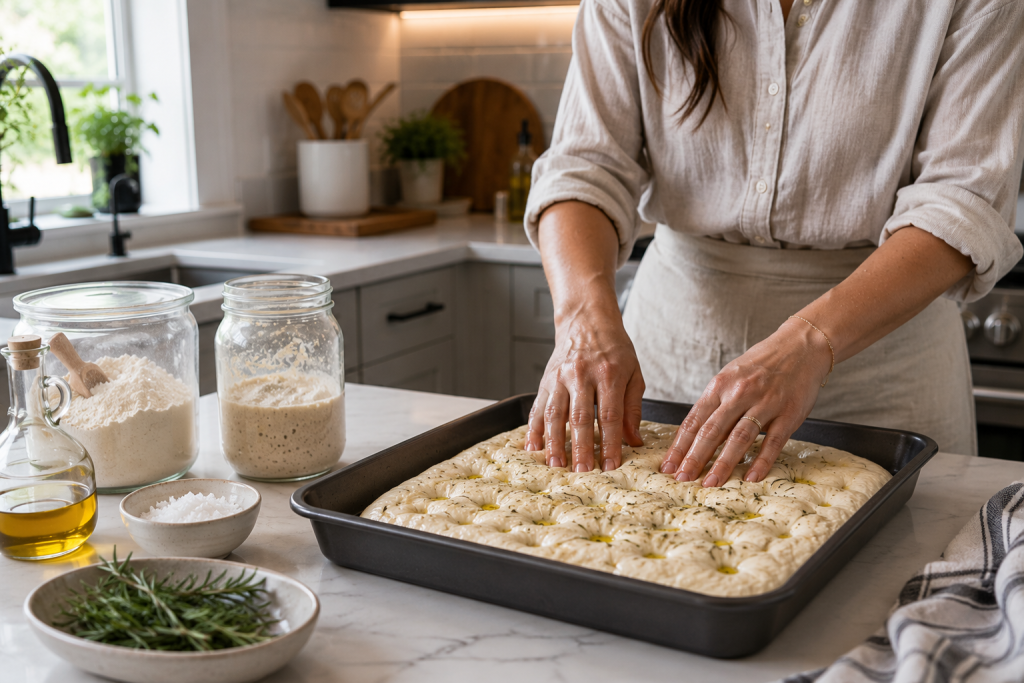
Spoon a little extra olive oil across the surface before baking. Use your fingertips to gently press into the dough, forming the classic focaccia dimples.
Do not punch it down. Think gentle pressure, not dough destruction. Preserve as many bubbles as possible while handling the dough.
Step 8: Add Toppings
Scatter rosemary, garlic slices, and flaky salt over the top. You can also add cherry tomatoes, olives, caramelized onions, or thin lemon slices.
Step 9: Bake
Bake at 425°F for 25 to 30 minutes, or until the top turns golden and the edges look crisp.
Allow the focaccia to rest in the pan for 10 minutes before moving or slicing it. Then move it to a rack before slicing.
How to Get Those Classic Focaccia Dimples
The dimples are not just for looks. They hold olive oil, herbs, and flavor.
Use oiled fingers and press straight down into the dough. If the dough springs back too quickly, it may need more time to relax. Wait 15 minutes, then try again.
Also, be generous with olive oil. Focaccia is not the moment to act shy. The oil helps fry the bottom slightly, giving you that crisp, golden base.
Italian-Inspired Topping Ideas
This sourdough focaccia recipe works as a blank canvas. Try these combinations:
Rosemary and garlic: Classic, simple, and always good.
Cherry tomato and basil: Bright, juicy, and perfect for summer.
Olive and oregano: Salty and bold with Mediterranean flavor.
Parmesan and cracked pepper: Savory, rich, and great with soup.
Caramelized onion and thyme: Sweet, earthy, and deeply comforting.
You can keep it simple or dress it up. Either way, the bread does most of the talking.
Common Mistakes to Avoid
Using Weak Starter
Your starter should be active and bubbly. If it smells flat or has not risen after feeding, your dough may struggle.
Rushing the Rise
Sourdough moves at its own pace. Room temperature affects fermentation. Cooler kitchens slow the rise, while warmer kitchens make it move faster, so pay attention to the dough’s texture and appearance instead of relying only on time.
Skipping Olive Oil
Olive oil creates flavor, softness, and crisp edges. Without enough oil, focaccia can taste dull and dry.
Cutting Too Soon
Fresh focaccia smells impossible to resist, but give it a few minutes. If you slice focaccia too soon, the center may turn dense or gummy.
What to Serve With Sourdough Focaccia
Sourdough focaccia pairs with almost anything cozy and savory. This sourdough focaccia recipe pairs beautifully with soups, pasta, dips, and Italian-style appetizers.
Serve it with tomato soup, minestrone, pasta, roasted vegetables, or a big Italian salad. It also works beautifully on a snack board with olives, dips, and marinated artichokes.
For a creamy contrast, pair warm focaccia with vegan sour cream, hummus, whipped feta, or herbed yogurt dip.
You can also slice it horizontally and turn it into a sandwich. Add roasted peppers, pesto, mozzarella, arugula, or grilled vegetables. It becomes lunch with main-character energy.
Recommended Products
1. Digital Kitchen Scale
A kitchen scale helps you measure flour, water, and starter accurately. Sourdough baking works better when you use grams instead of cups.
2. 9×13-Inch Baking Pan
A sturdy metal baking pan helps create crisp edges and an evenly baked bottom. It is a must-have for focaccia.
3. Bench Scraper
Sticky dough becomes much easier to handle with a bench scraper. It also helps move dough without tearing it.
4. Extra Virgin Olive Oil
Good olive oil makes a huge difference in focaccia. Since the flavor comes through clearly, choose one you enjoy.
5. Dough Whisk
A dough whisk mixes wet, sticky dough more easily than a regular spoon. It saves time and keeps your hands cleaner during the first mix.
Research-Backed Notes on Sourdough
Sourdough has been studied for its fermentation process and possible nutrition benefits. Research suggests sourdough fermentation may help with:
- Mineral availability because fermentation can reduce phytic acid.
- Protein digestibility because natural fermentation helps break down parts of the grain.
- Carbohydrate digestion because sourdough may affect how starches behave after baking.
A systematic review on sourdough nutrition found that sourdough may support better nutrient availability and influence glycemic response, depending on the recipe and fermentation method.
Another review on the nutritional impact of sourdough fermentation explains how sourdough fermentation can affect minerals, proteins, carbohydrates, and overall bread quality.
Still, sourdough is not magic bread. The benefits depend on the flour, starter, fermentation time, and baking method. Even so, traditional sourdough gives bread a deeper flavor, better texture, and a slower, more mindful baking process many home bakers love.
Storage and Reheating Tips
Focaccia tastes best the day you bake it. Still, leftovers can hold up well with the right storage.
Keep fully cooled focaccia in an airtight container at room temperature for up to two days. To keep leftovers longer, wrap sliced pieces well and place them in the freezer.
To reheat, warm slices in a 350°F oven for 8 to 10 minutes. An air fryer also works well if you want to bring back a crisp edge. Avoid the microwave if possible because it can make the bread chewy and soft in the wrong way.
Conclusion
This sourdough focaccia recipe brings together everything that makes homemade bread worth the wait: a crisp golden crust, a soft airy center, rich olive oil flavor, and that gentle sourdough tang. With a little patience, an active starter, and simple Italian-inspired toppings, you can bake focaccia that feels rustic, comforting, and special enough to share. Whether you serve it with pasta, soup, salad, or your favorite dip, this bread adds warmth to the table and reminds you that good food does not have to be complicated.
FAQs
1. Can I make sourdough focaccia without bread flour?
Yes. You can use all-purpose flour, but the texture may be softer and less chewy. Bread flour gives better structure and bigger bubbles.
2. What signs show that focaccia dough is ready for the oven?
The dough is ready when it looks airy, puffed, bubbly, and slightly wobbly. If it feels tight or dense, give it more time at room temperature.
3. Can I add toppings before the overnight proof?
It is better to add toppings right before baking. Fresh toppings can release moisture during the long proof and affect the dough.
4. Why is my sourdough focaccia dense?
Dense focaccia usually comes from weak starter, under-fermentation, or not enough final rise time. Make sure your starter is active and your dough looks airy before baking.
5. Can I freeze sourdough focaccia?
Yes. Slice it first, freeze it in an airtight bag, and reheat in the oven. It will taste much better than microwaved leftovers.