Savory & Super Tasty: Soy Sauce Eggs
We may earn a commission for purchases made using our links. Please see our disclosure to learn more.
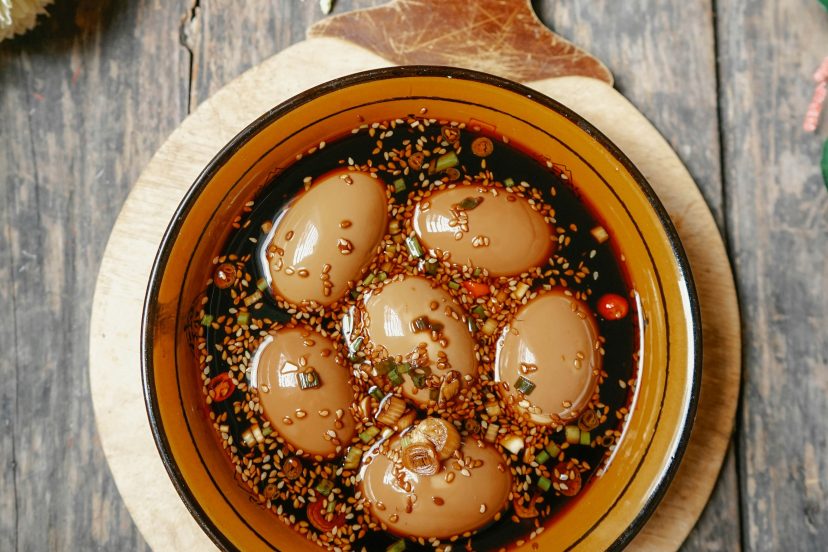
Soy sauce eggs are proof that a little prep can completely change an everyday ingredient. After a few hours in a salty-sweet marinade, plain boiled eggs develop bronzed whites, rich umami flavor, and a creamy center that makes rice, noodles, toast, and salads far more exciting.
You may know them as ramen eggs, shoyu eggs, or ajitsuke tamago. The versions vary, but the idea stays simple: cook the eggs to your preferred doneness, peel them, and soak them in a soy-based marinade.
This recipe is easy to adjust, so you can make it sweeter, spicier, less salty, or more aromatic.
What Are Soy Sauce Eggs?
Soy sauce eggs are peeled boiled eggs marinated in soy sauce, usually with water, mirin, sugar, and optional aromatics.
Japanese ramen eggs often feature jammy yolks and a soy-mirin marinade. Other versions may include garlic, scallions, sesame seeds, chili, tea, or warm spices. Think of soy sauce eggs as a flexible cooking method rather than one rigid recipe.
As the eggs soak, the marinade gradually seasons the whites. The yolks remain milder, giving each bite a pleasant contrast between savory, sweet, and creamy flavors.
Why This Recipe Works
Water softens the saltiness of the soy sauce, while mirin and sugar round out its sharper edges. Ginger, garlic, and scallion add flavor without covering up the egg.
A compact container or zip-top bag keeps the eggs surrounded by marinade, so you do not need to prepare a huge amount of liquid.
An ice bath also stops carryover cooking. That small step helps preserve the soft, custardy yolk you worked so carefully to create.
Ingredients You Will Need
For six large eggs, gather:
- 6 cold large eggs
- 1/2 cup soy sauce
- 1/2 cup water
- 1/4 cup mirin
- 1 tablespoon brown sugar or honey
- 1 garlic clove, lightly crushed
- 3 thin slices of fresh ginger
- 1 scallion, cut into short pieces
Optional additions include a teaspoon of rice vinegar, a small splash of sesame oil, chili flakes, or a strip of orange peel.
Easy Substitutions
Use low-sodium soy sauce when you want a gentler marinade. Tamari can work for a gluten-free version, although you should check the label because formulas vary between brands.
No mirin? Mix three tablespoons of water with one tablespoon of sugar. The flavor will taste slightly different, but the sweetness still balances the salty soy sauce.
How to Make Soy Sauce Eggs
Prepare the Marinade
Place the soy sauce, water, mirin, sugar, garlic, ginger, and scallion in a small saucepan.
Heat the marinade gently over medium heat, stirring until the sugar has fully melted. Take the pan off the stove and leave the mixture to cool to room temperature.
Using cooled marinade matters because warm liquid can continue cooking the eggs and change the texture of the yolks.
Boil the Eggs
Add water to a medium saucepan and heat it until it begins boiling steadily. Carefully lower the cold eggs into the water with a spoon.
Cook the eggs for:
- 6 to 6 1/2 minutes for runny yolks
- 6 1/2 to 7 minutes for jammy yolks
- 8 minutes for firmer, creamy yolks
- 10 to 11 minutes for fully set yolks
Maintain a gentle, consistent boil to prevent the eggs from knocking against the pan and breaking.
Chill and Peel
Transfer the eggs immediately to a bowl filled with ice water. Leave the eggs in the ice bath for about 8 to 10 minutes.
Tap each shell gently all over, then begin peeling from the wider end where the air pocket usually sits. Peeling under a thin stream of water can help loosen stubborn shell fragments.
Marinate the Eggs
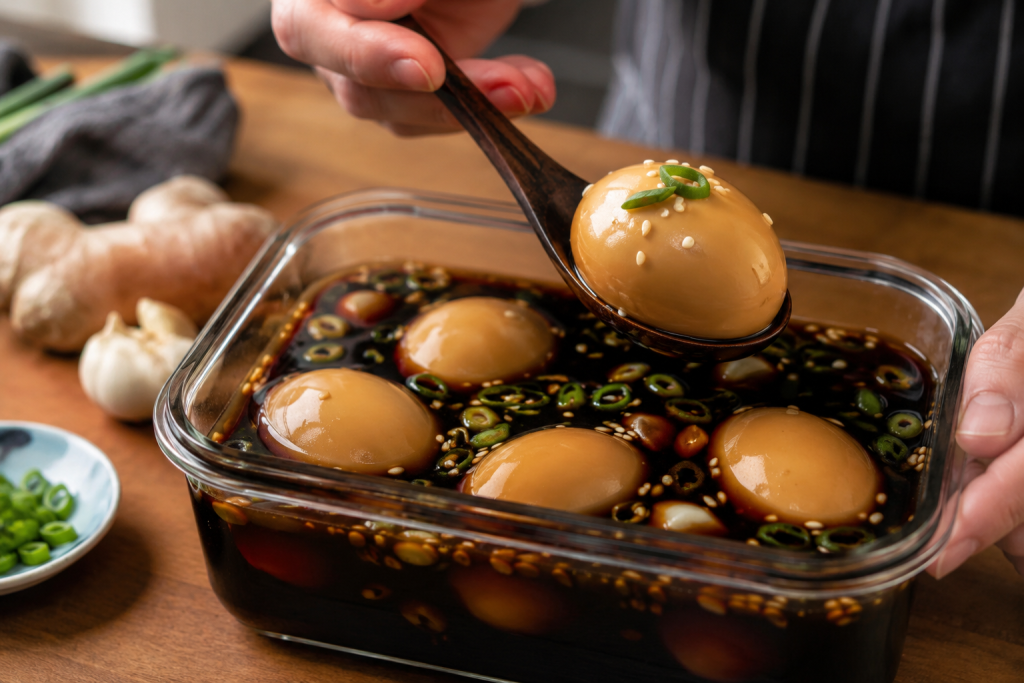
Place the peeled eggs in a compact food-safe container or zip-top bag. Pour the cooled marinade over them and refrigerate.
Four hours creates a mild flavor. Six to 12 hours produces a deeper color and stronger seasoning without making the whites excessively salty.
Turn the eggs once during marinating if part of the surface sits above the liquid.
Slice and Serve
Lift the eggs from the marinade and blot them lightly with a clean paper towel.
Slice them with a sharp, damp knife or a piece of clean cooking thread. Serve them cold, briefly brought to room temperature, or gently warmed by a bowl of hot broth.
Avoid simmering jammy eggs directly in soup because the yolks can overcook surprisingly fast.
Choose Your Ideal Yolk Texture
Egg size, starting temperature, cookware, and altitude can shift the cooking time slightly. Your first batch may be a delicious test run.
For the classic ramen-style texture, aim for 6 1/2 to 7 minutes. The outside of the yolk should hold its shape, while the middle stays glossy and custard-like.
For young children, pregnant people, older adults, or anyone with a weakened immune system, consider pasteurized eggs or cook the yolks fully. The FDA recommends refrigerating eggs and cooking them thoroughly to reduce the risk of foodborne illness.
Flavor Variations Worth Trying
Spicy Garlic Soy Eggs
Add sliced chili, an extra garlic clove, and one teaspoon of toasted sesame oil.
Finish the eggs with sesame seeds and chopped scallions. You can also add a small spoonful of chili crisp before serving.
Citrus and Ginger
Add two thin strips of orange or lemon peel and an extra slice of ginger.
Carefully trim away the white pith, as it can give the marinade a bitter taste. You want a light citrus fragrance rather than the flavor of chewing on a candle.
Korean-Inspired Eggs
Stir chopped scallions, minced garlic, sesame seeds, and gochugaru into the cooled marinade.
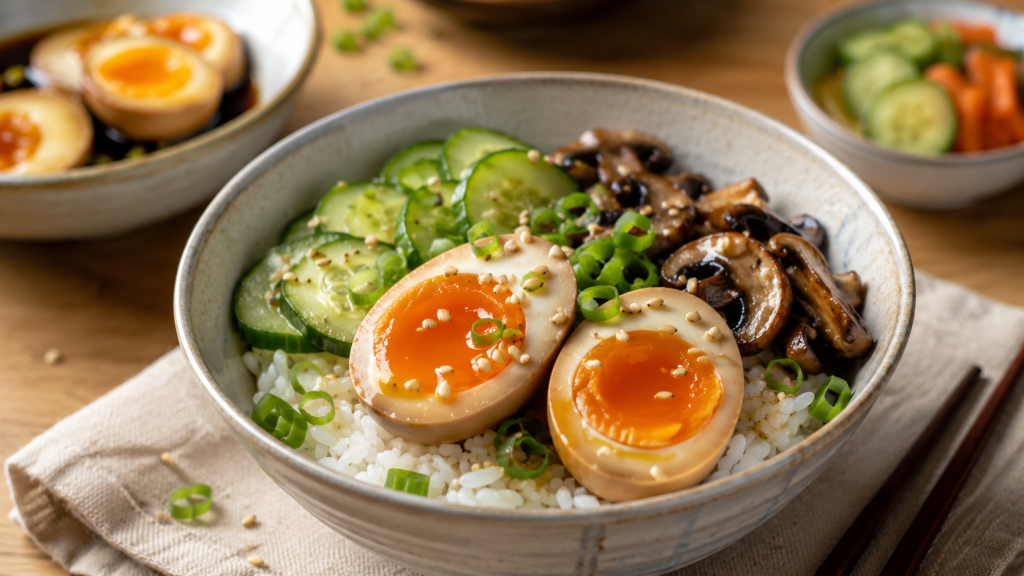
Serve the eggs over warm rice with cucumbers or sautéed greens. A small spoonful of the marinade can season the rice, but you will not need much.
Five-Spice Soy Eggs
Add one star anise, a small cinnamon stick, and a pinch of Chinese five-spice powder while warming the marinade.
This variation works especially well with steamed rice, noodle soups, or braised vegetables.
Common Mistakes and Easy Fixes
The Eggs Taste Too Salty
The eggs may have soaked too long, or the marinade needed more water.
Add another 1/4 cup of water next time and begin tasting the eggs after four hours. Low-sodium soy sauce can also help.
The Yolks Turned Chalky
The eggs probably cooked too long or sat in warm marinade.
Shorten the boiling time and make sure the marinade has cooled before pouring it over the eggs.
The Shells Keep Sticking
Very fresh eggs can be harder to peel.
Chill them thoroughly, crack the shells all over, and peel under water. Work slowly rather than pulling away large pieces of shell.
The Color Looks Uneven
Part of the egg likely remained above the marinade.
Use a narrower container, remove excess air from a zip-top bag, or turn the eggs halfway through. Uneven coloring will not ruin the flavor, so there is no need to declare a kitchen emergency.
Ways to Serve Soy Sauce Eggs
Place a halved egg over ramen, udon, congee, fried rice, or a simple rice bowl. Add sliced cucumbers, sautéed greens, roasted mushrooms, or shredded carrots to make the meal more complete.
Soy sauce eggs also work well on avocado toast, inside a lunch box, or chopped into a savory sandwich filling.
For a relaxed buffet or picnic spread, serve quartered eggs beside this creamy Italian pasta salad. The eggs’ salty umami flavor offers a lively contrast to the creamy, zesty dressing.
You can also mash one egg with mayonnaise, scallions, and a few drops of soy sauce. Spread it over toast for a quick breakfast that tastes much more ambitious than the effort involved.
Nutrition and Sodium
Eggs provide high-quality protein along with nutrients such as choline, vitamin D, iodine, folate, and several B vitamins, according to a 2023 review of egg nutrition and health.
However, soy sauce contains plenty of sodium. The World Health Organization’s sodium guidance explains that consistently high sodium intake is associated with increased blood pressure.
You do not have to give up the recipe. Choose low-sodium soy sauce, add more water to the marinade, and avoid pouring large amounts of the liquid over your meal.
Serving the eggs with plain rice, fresh vegetables, or an unsalted broth can also help balance the overall dish.
Storage and Food Safety
Keep soy sauce eggs refrigerated while they marinate and after you remove them from the liquid. The FDA’s egg safety guidance emphasizes proper refrigeration and thorough cooking.
For the best texture and a conservative storage window, eat peeled soy sauce eggs within three days, especially when the yolks remain soft. Keep them in a clean, covered container and use clean utensils when serving.
Discard the used marinade rather than saving it for another batch. You should also throw away eggs that have remained at room temperature for more than two hours.
Kitchen Tools That Make Soy Sauce Eggs Easier
ThermoPro TM02 Digital Kitchen Timer
Accurate timing makes it easier to repeat your preferred yolk texture. Its dual-timer function can also help when you are cooking noodles or preparing another dish at the same time.
Cuisinart Chef’s Classic 1.5-Quart Saucepan with Cover
This compact saucepan works well for warming the marinade and cooking modest batches without filling an oversized pot.
Rubbermaid Brilliance Food Storage Container
A leak-resistant container keeps the marinade contained in the refrigerator. Choose a size that holds the eggs closely, since extra space requires more marinade.
PELEG DESIGN Egguins Egg Cooker and Holder
This six-egg holder lets you lower several eggs into boiling water together and lift them out without chasing slippery eggs around the pan.
Japanese Seasoned Egg Maker for Four Eggs
This compact container is shaped specifically for marinating boiled eggs. It can reduce the amount of soy sauce mixture needed while helping keep the egg surfaces covered.
Conclusion
Soy sauce eggs turn a basic kitchen staple into a deeply savory topping with very little hands-on effort. Once you find your preferred boiling time, the recipe becomes simple to repeat and easy to customize. Start with the balanced marinade, taste the eggs after a few hours, and adjust the salt, sweetness, aromatics, and heat to suit the meal you are making.
FAQs
How much time do soy sauce eggs need in the marinade?
Allow the eggs to soak for a minimum of four hours. Six to 12 hours usually gives the best balance of flavor, color, and texture. Leaving them longer can produce a saltier flavor and firmer egg whites.
Can I make soy sauce eggs without mirin?
Yes. Replace the mirin with water and a little sugar or honey. You can also add a small splash of rice vinegar when you want more brightness, although vinegar tastes sharper than mirin.
What causes soy sauce eggs to become rubbery?
They may have cooked too long, marinated too long, or soaked in an overly concentrated mixture. Shorten the cooking or marinating time and add more water to the marinade.
Can the soy sauce egg marinade be used more than once?
Discarding the used marinade is the simplest and safest option. It has been in direct contact with peeled eggs and should not be poured over another ready-to-eat meal. Making a fresh batch also gives you better control over the saltiness and flavor.
Are soy sauce eggs eaten hot or cold?
Both options work. They are often served chilled or briefly brought to room temperature. Hot ramen broth can warm them gently without cooking the jammy yolks much further.